
The session cycle
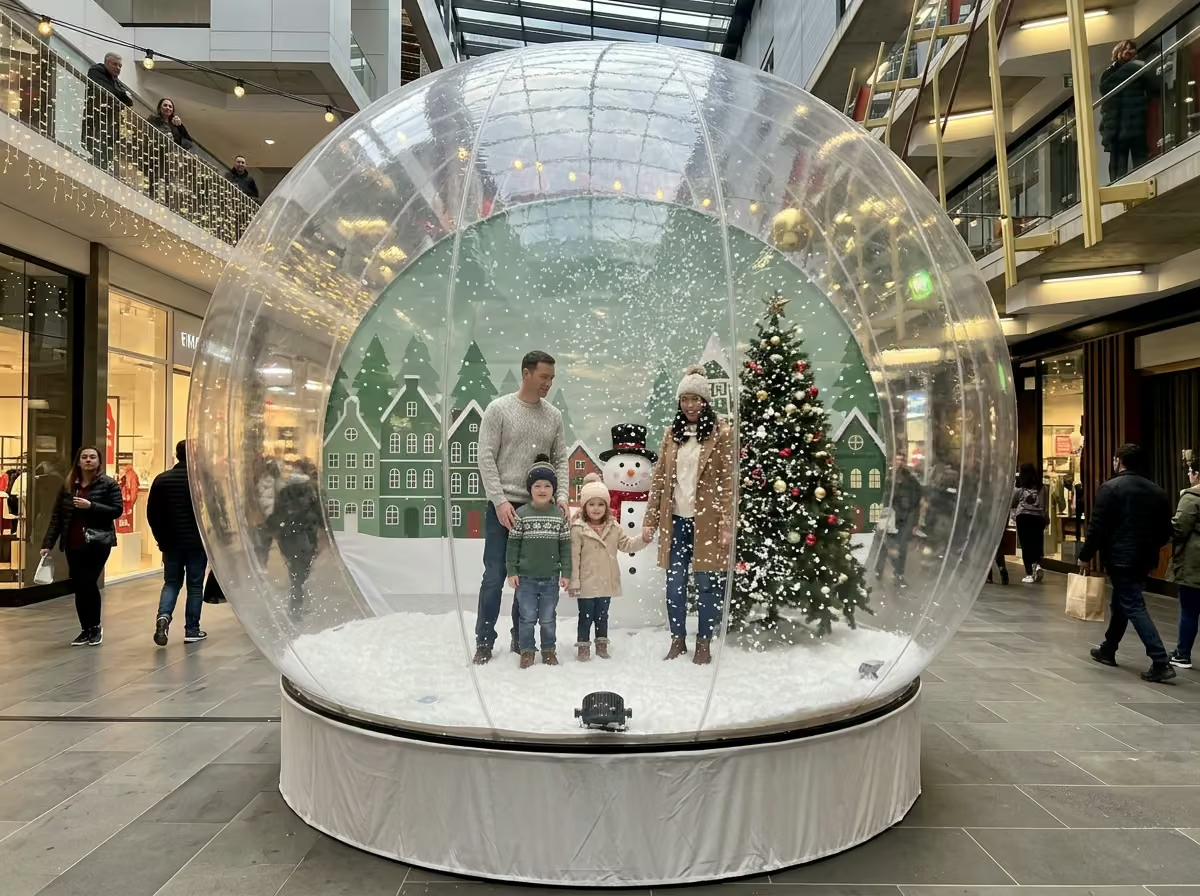
Each group gets a short timed session inside, then the next group is brought forward — about three minutes end to end at best pace.
The three minutes is not just the session. It includes bringing the group to the entrance, the session itself, photos, exit, and the few seconds the crew needs before the next entry. Removing any one of those steps is what people mean when they claim a higher figure.
- ❄Normal maximum group size is up to 8 children, or up to 6 adults, at one time
- ❄Recommended minimum user age is 3 years and over
- ❄There is no published height restriction
- ❄Group management always remains subject to safe operation and operator judgement on the day
What throughput looks like across a day
Roughly 20 groups an hour is the ceiling; a full trading day realistically lands between about 95 and 140 groups.
That range is deliberately wide, because it is set by your hours and your queue discipline rather than by the equipment. A centre running eight trading hours with a dedicated door operator alongside the second crew member and timed slots sits at the top of it. A site with a single unstaffed door and no slot board sits well below the bottom.
What actually slows it down
Unmanaged queues, oversized groups, snow reset between sessions and staff doing two jobs at once.
- ❄An open door with no visible slot board — groups arrive with no expectation and negotiate at the entrance
- ❄Groups larger than the session is designed for, which stretches every stage of the cycle
- ❄Combining door management with receipt checking or code scanning on one person
- ❄Peak-hour surges planned for as if they were average demand
Planning hours against your audience
Work backwards: estimate the groups you want through, divide by 20 an hour, then add contingency for peaks and breaks.
Most sites over-buy the quiet middle of the day and under-staff the two peaks. A shorter, better-staffed operating window usually returns more photographed groups than a long thin one — and it reads better to visitors, because the attraction is always busy and always open when promised.
Ticketing, slots and spend-and-win
Timed slots protect throughput. Any validation step — receipts, codes, sign-ups — needs its own pair of hands.
Retail mechanics work well with the globe precisely because the queue is a captive, motivated audience. Just budget for the extra role rather than assuming the two-person crew can absorb it.
- ❄Standard operation is delivered by two GlobeHire operational staff
- ❄Additional staffing can be arranged for continuous operation through crew lunch and rest breaks, extended operating hours, split shifts, or particular client and event requirements