1. The seasonal residency
A single attraction installed for several weeks in a high-traffic atrium. Because it stays put, your marketing team can promote it once and let it work across the whole trading period — half term, late-night shopping and the final pre-Christmas fortnight.
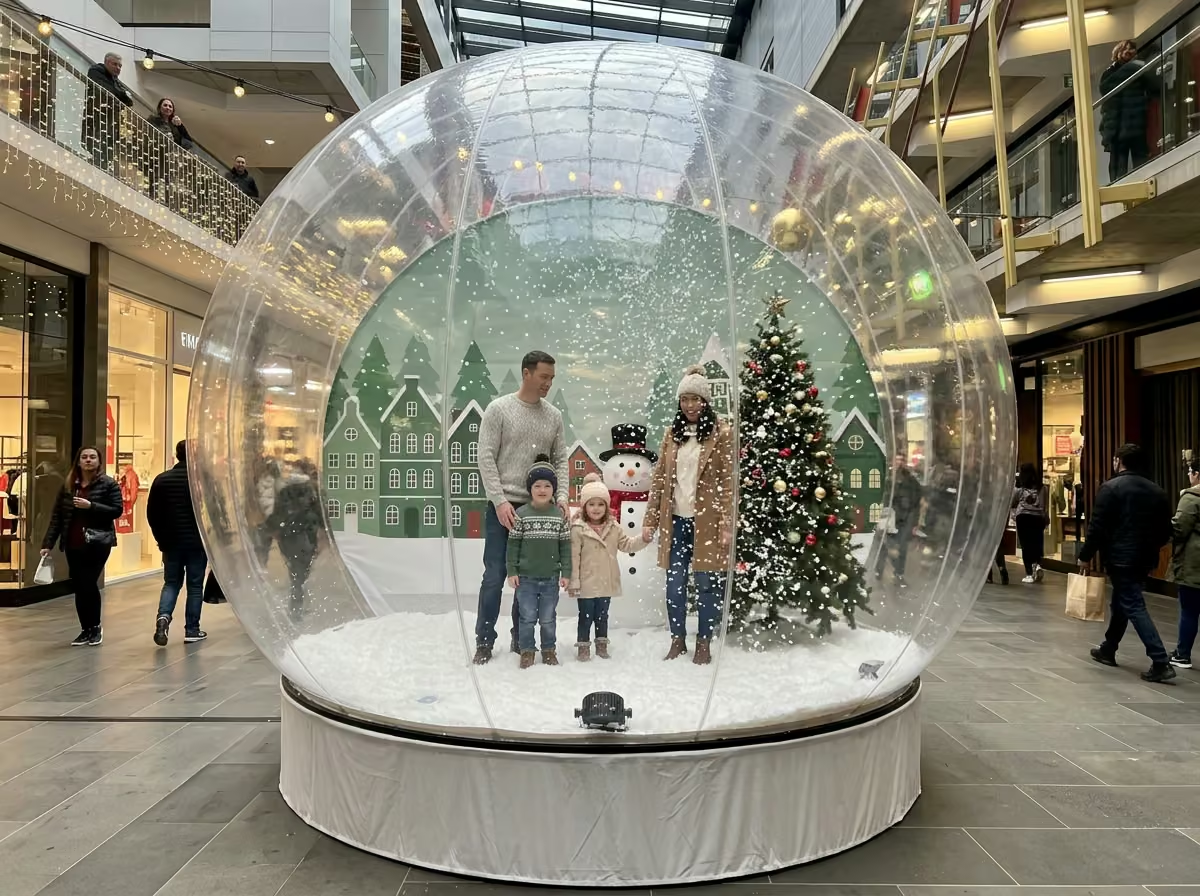
A walk-in snow globe suits this because the experience refreshes itself each group without any change of set: guests throw the snow towards the internal fan, so every party gets a live scene rather than a tired one.
2. Spend-and-win mechanics
Tie entry to a proof of spend from centre tenants and the activation stops being a cost line and starts being a tenant-facing benefit. Visitors present a receipt above a threshold, get a timed slot, and tenants see attributable trade.
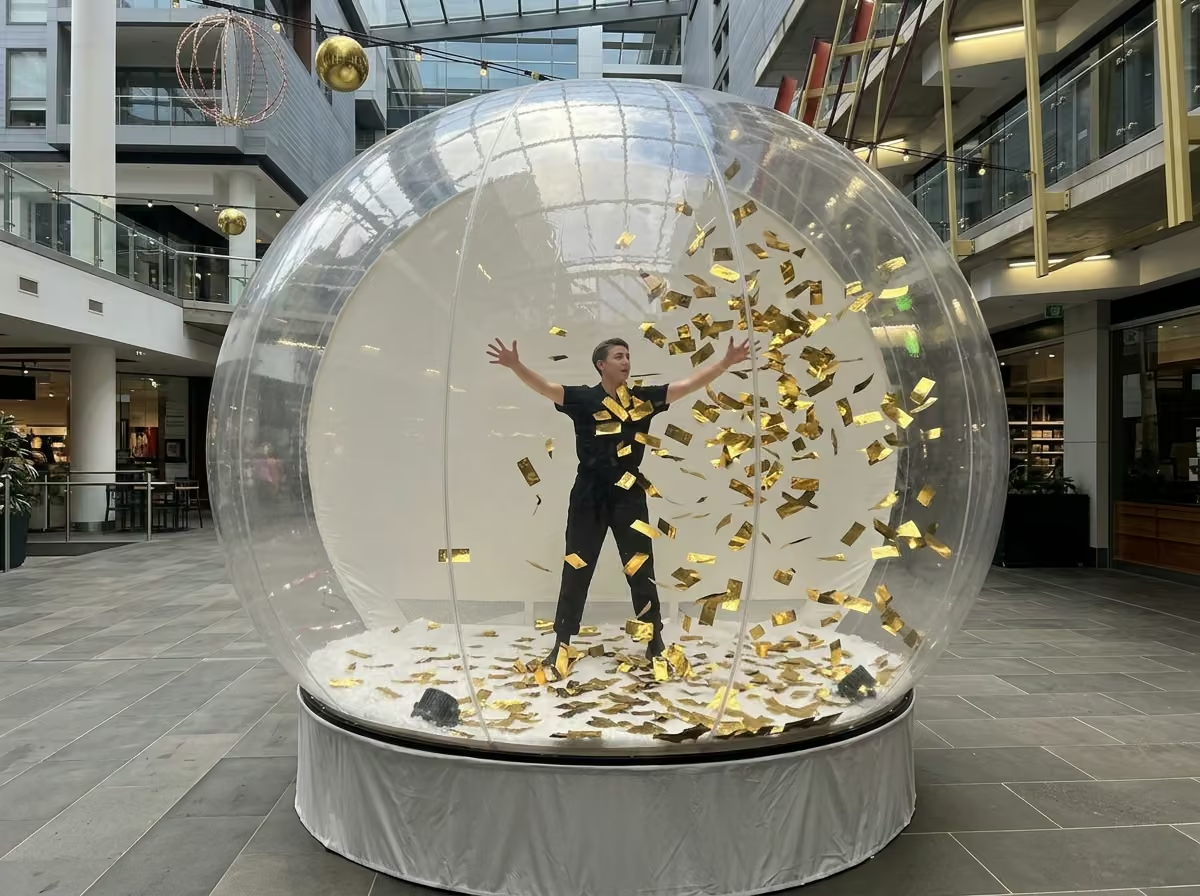
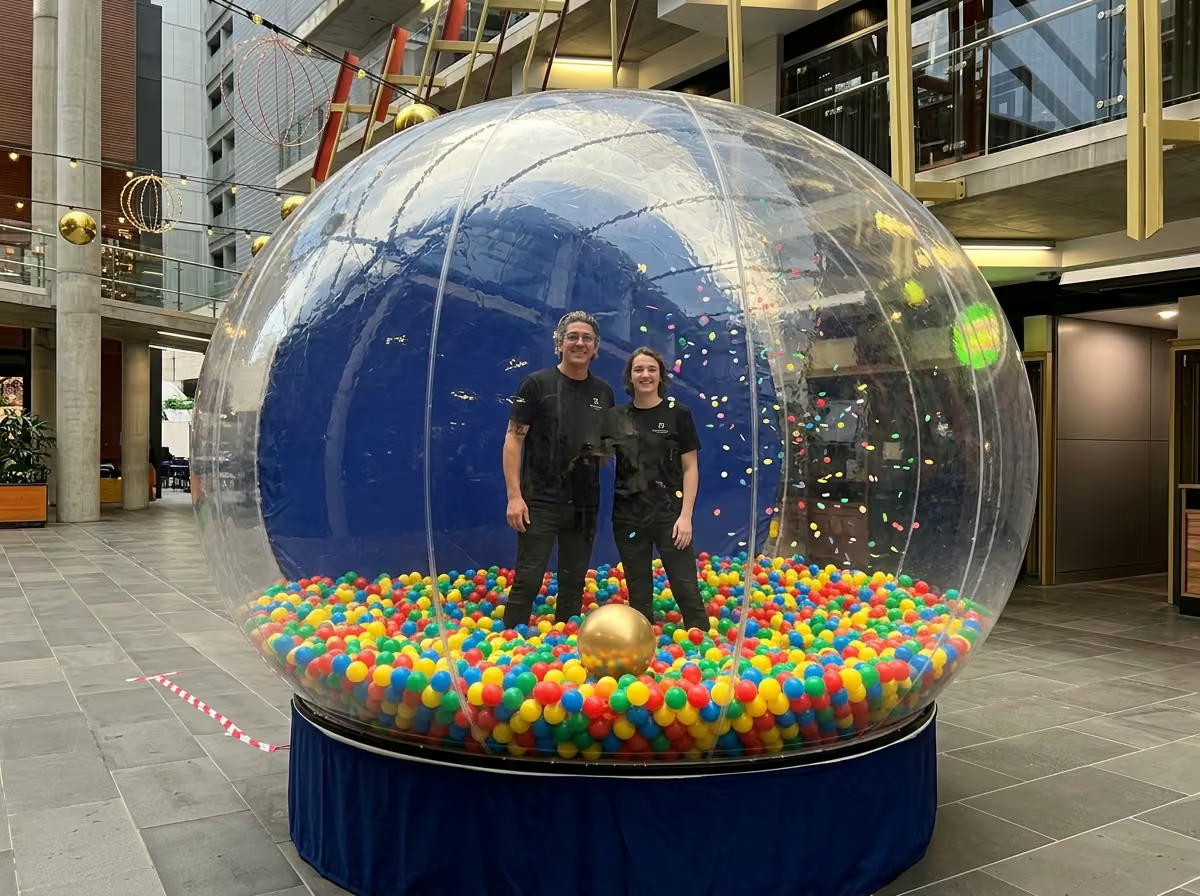
Prize-game globes fit this best. A timed grab for vouchers or a hidden golden ball gives a clear win condition, a countdown for onlookers to watch, and a natural stream of clips for your channels.
3. Photo-first brand moments
If the objective is reach rather than dwell, treat the activation as a set. Brand the surround, keep the queue short, and put a capture prompt at the exit. The measurable output is posts and tagged content, so make the branded element unavoidable in frame.
What to agree with your operations team early
- ❄Atrium position, footprint and the queue line that will form beside it
- ❄Power supply and cable management under centre standards
- ❄Out-of-hours access for build and de-rig
- ❄RAMS and public liability documentation for your contractor file
- ❄Who stewards the attraction, and the entry slot length
Measuring it properly
Decide the metric before you book. Dwell and footfall come from your existing counters, so all you need is a clean comparison window. Attribution to tenants needs the receipt mechanic. Reach needs a hashtag and a capture point. Trying to claim all three from one activation without instrumenting any of them is the usual reason a good install reports badly.