
A branded prize game for a product launch
A timed prize game wrapped in campaign branding, with data capture at entry.
- Globe
- Golden Ball Globe
This is an illustrative install format showing how the globe is typically planned and run. It is not a record of a specific client project; venue details and results are not shown until genuine, approved project write-ups are available.
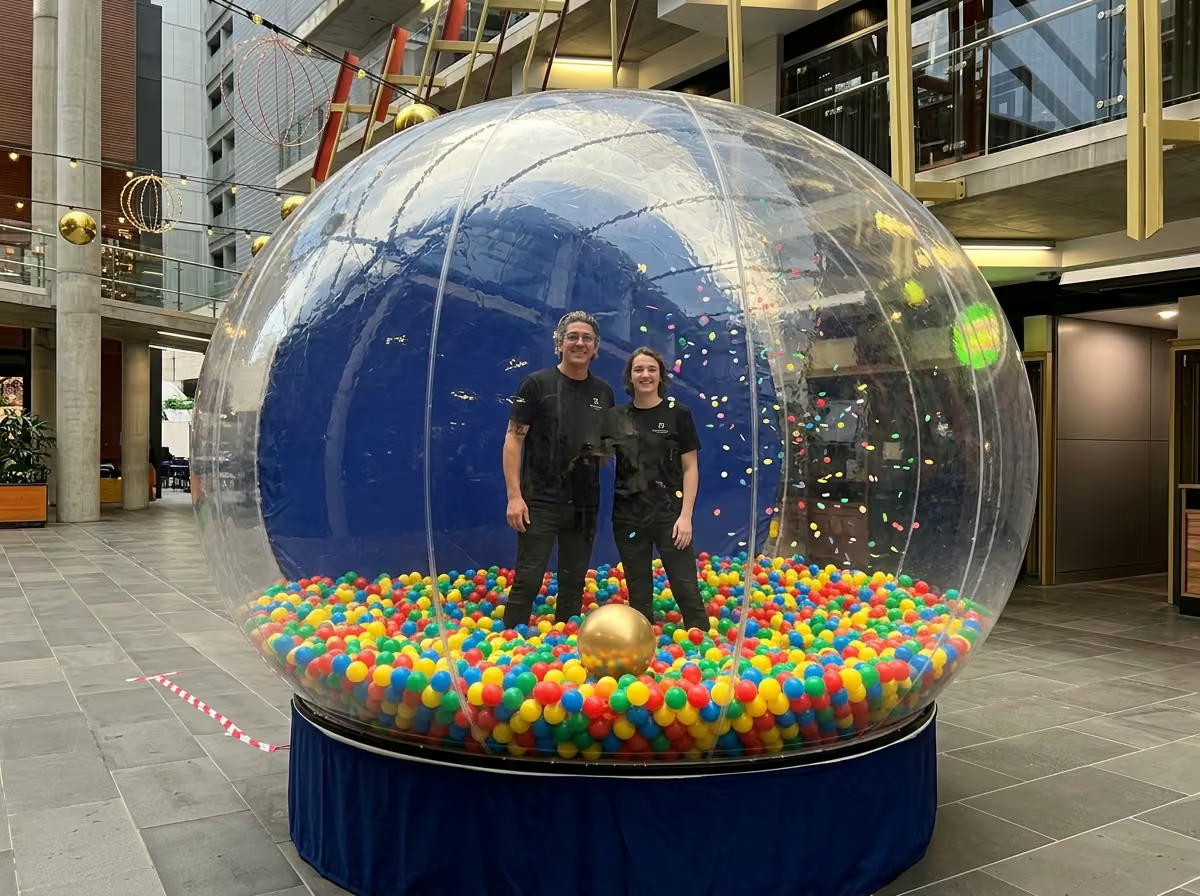
What did the client want to achieve?
Generate marketing opt-ins and shareable content for a new product launch using a game mechanic worth queueing for.
What was the starting situation?
The campaign had artwork, a launch date and a footfall-heavy London site, but no physical mechanic to convert passing interest into captured data.
What were the challenges?
The constraints that shaped how the activation was designed and run.
- Entry gated behind a tablet sign-up without stalling the queue
- Predictable throughput across an eight-hour trading day
- Full campaign branding across every surface a photo would capture
- Agency content capture without closing the game to the public
Our approach
We designed the mechanic around throughput: one screen at entry, timed rounds with tiered prizes to fix session length, and two short capture windows booked into the day rather than improvised.
The solution we delivered
A fully wrapped Golden Ball globe running a timed prize game, with tablet-based entry and opt-in capture, prize tiers pacing each round, and scheduled content windows each day.
The brief in full
The agency needed a queue-worthy game mechanic that generated marketing opt-ins and shareable content for a new product launch. Entry was gated behind a tablet sign-up, so throughput had to stay predictable across an eight-hour trading day.
What we supplied
- Full campaign wrap: exterior, base and internal backdrop
- Timed golden-ball game mechanic with prize tiers
- Tablet-based entry and marketing opt-in capture
- Agency-ready content capture slots each day
What happened during the process?
From first site visit to hand-back, in the order it ran.
- 1Mechanic designAgreed round length, prize tiers and win rates with the agency against a target of roughly 20 players an hour.
- 2Branding productionCampaign artwork applied to exterior wrap, base skirt and internal backdrop from the agency's brand guidelines.
- 3Data capture setupSingle-screen tablet sign-up with marketing opt-in, tested against queue timings before launch.
- 4InstallBuilt, wrapped and tested the evening before day one.
- 5OperateThree eight-hour days of timed rounds, with two short content-capture windows daily.
- 6Reporting and de-rigOpt-in totals and player counts handed to the agency at strike.
Products, materials and services used
Everything specified for this project, including consumable media and crewed services.
- 3.5m walk-in globe with full campaign wrap: exterior, base skirt and internal backdrop
- 5,000 branded lightweight balls and prize-token inserts
- Timed game mechanic with tiered prize structure
- Tablets and marketing opt-in capture forms
- Queue barriers, branded stanchions and directional signage
- Crewed operation, host and content-capture support
How long did it take?
Lead times and durations for a typical install of this format.
- Enquiry to quote
- Under 48 hours
- Booking lead time
- Approx. 4 weeks (artwork-led)
- Artwork deadline
- 10 working days before install for print
- Install
- Evening before day one, 2–3 hours including wrap
- Activation
- 3 days, 8 operating hours each
- De-rig
- Around 2 hours after the final round
What shaped the cost?
A short activation carries a higher daily cost than a residency, and the branded print, prize stock and data-capture kit sat on top of the core hire. The London siting and out-of-hours install were the other two factors that moved this quote.
We quote every project individually rather than publishing rates. Send your dates and venue for a tailored figure within 48 hours.
What problems came up, and how were they solved?
Every project throws something. These are the issues met on site and the fix that resolved each one.
Problem: The original sign-up form asked for too many fields and the queue stalled within the first hour.
How we solved it: The form was cut to one screen — name, email, opt-in — which restored throughput to roughly 20 players an hour without reducing usable data.
Problem: Prize tiers ran ahead of schedule on day one and higher tiers depleted early.
How we solved it: Win rates were rebalanced overnight so the top tier remained available across all three days.
Problem: Content capture blocked public play during the first attempt.
How we solved it: Two short windows were booked at natural lulls, with the host holding the queue for a few minutes rather than closing the game.
Before and after
What changed between the site as we found it and the site as it ran.
| Aspect | Before | After |
|---|---|---|
| The campaign | Artwork and a launch date with no physical mechanic. | A queued prize game generating opt-ins and content. |
| Entry flow | A multi-field form that stalled the queue. | One screen at entry, roughly 20 players an hour. |
| Content | Planned as an ad-hoc shoot. | Two booked capture windows a day with the game still open. |
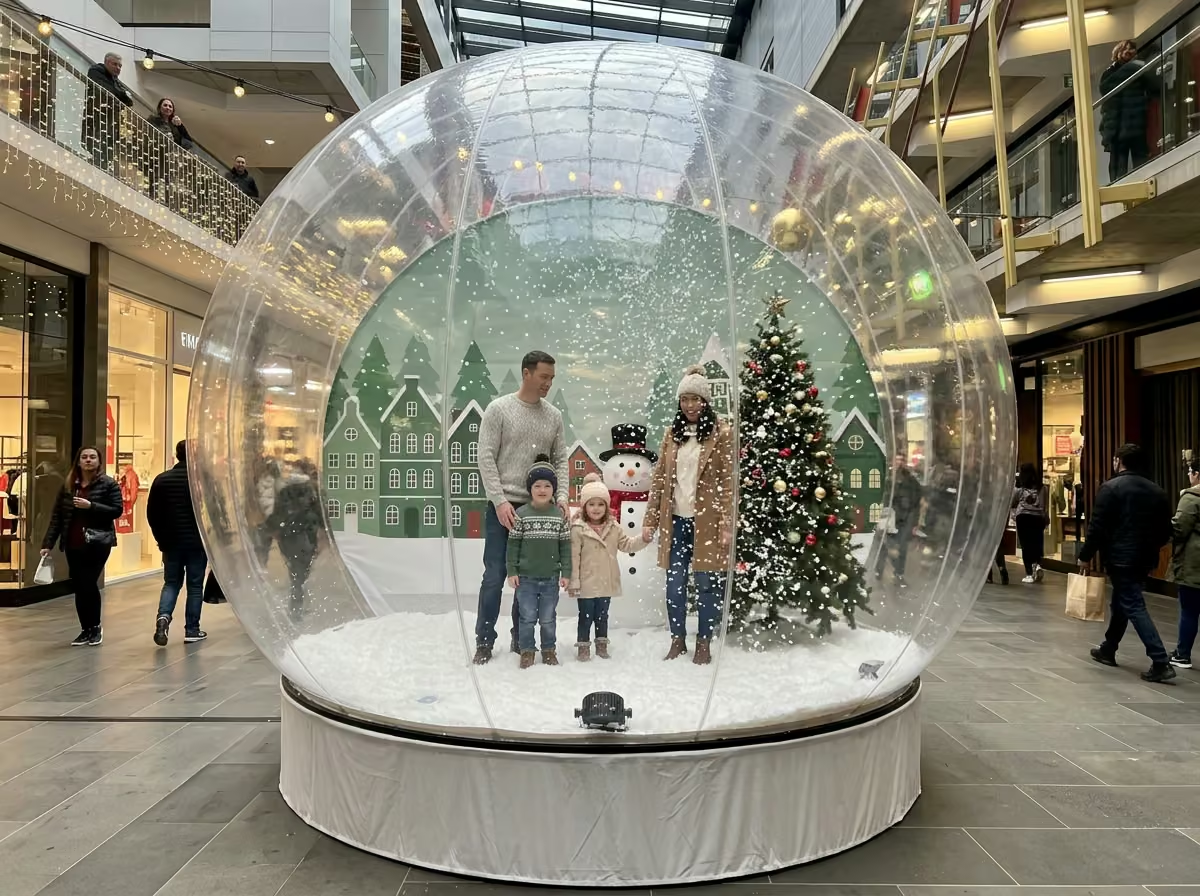
How this format could look
Reference images showing how a similar installation can be built, dressed and operated in a comparable space.
What made it work
The parts of this format worth copying if you're planning something similar.
Gate entry, but keep it to one screen
A single tablet sign-up captured the opt-in without stalling the queue. Longer forms are where throughput and goodwill are lost.
Prize tiers do the pacing for you
Timed rounds with tiered prizes gave a predictable session length across an eight-hour day, which is what the agency's staffing plan depended on.
Book content capture slots into the day
Two short capture windows produced usable campaign assets without closing the game to the public.
Plan your version of this
Send your venue, dates and objective. We'll confirm whether this format fits your site and come back within 48 hours with a tailored quote.